Foam roller exercises with photos and instructions.
Foam roller exercises use your body weight on a firm roll of foam to roll out muscles. The roller is also used to mobilise the upper back, for example, or as support during an exercise. For many people, rolling calmly is a way to make stiff muscles feel more supple. Below are examples with images and instructions.
This page provides general information and is not a substitute for physiotherapy advice. If you have any complaints, consult a physiotherapist.
Exercise sheet · Foam roller · 9 exercises
Exercises with a foam roller
General examples with an image and a short explanation. Which exercises suit you is something you decide together with your physiotherapist.
Exercises with this sign have a full video in Kinmo. You need an account to watch it. Watch the videos in Kinmo
-
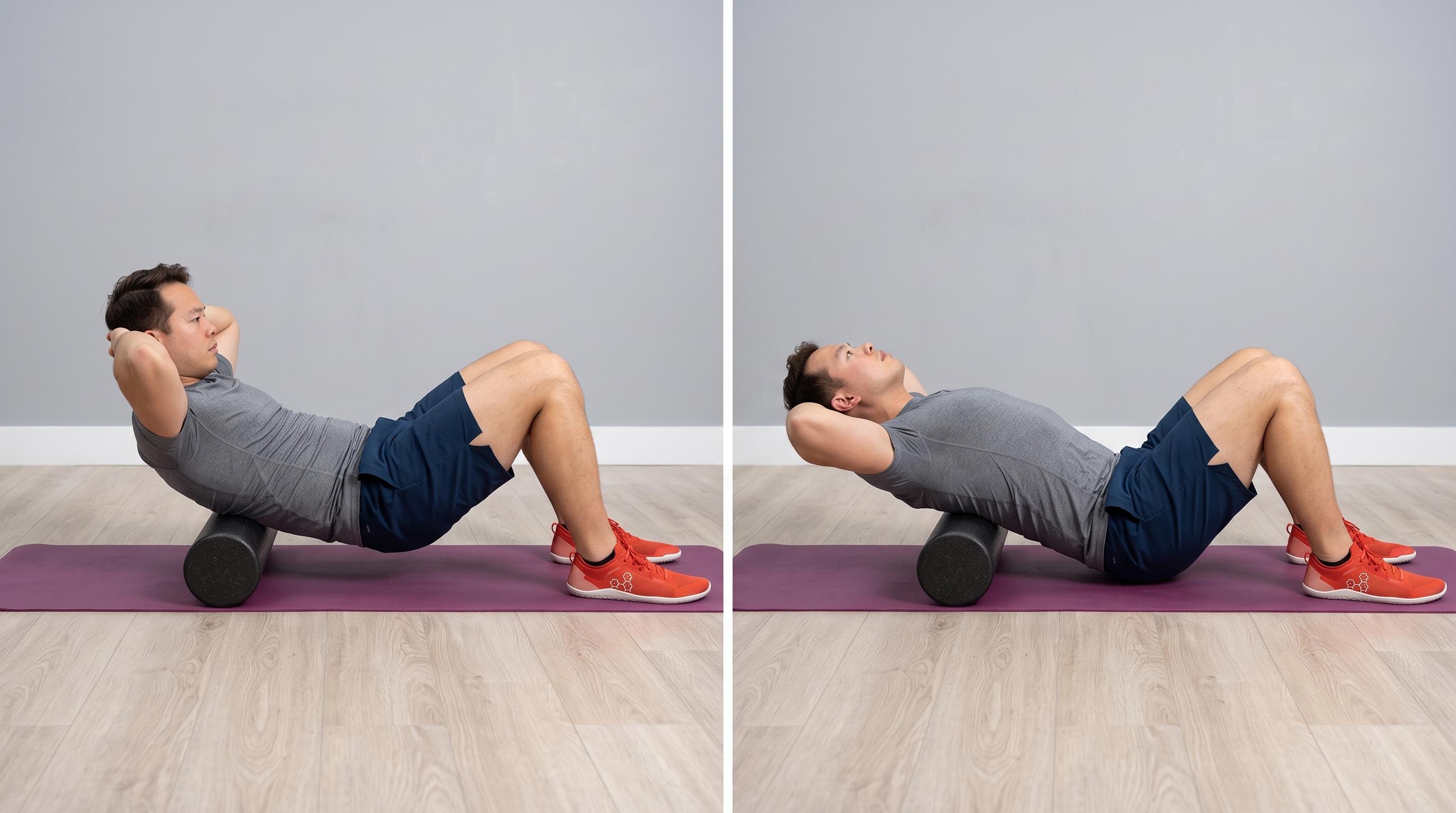
01Foam Roller Thoracic Extension
Back Extensors
Lie on your back with a foam roller across your upper back and your knees bent. Support your head with your hands behind your head and let your upper back slowly extend backward over the roller. Keep your lower back and glutes on the floor. Rise back up with control.
-
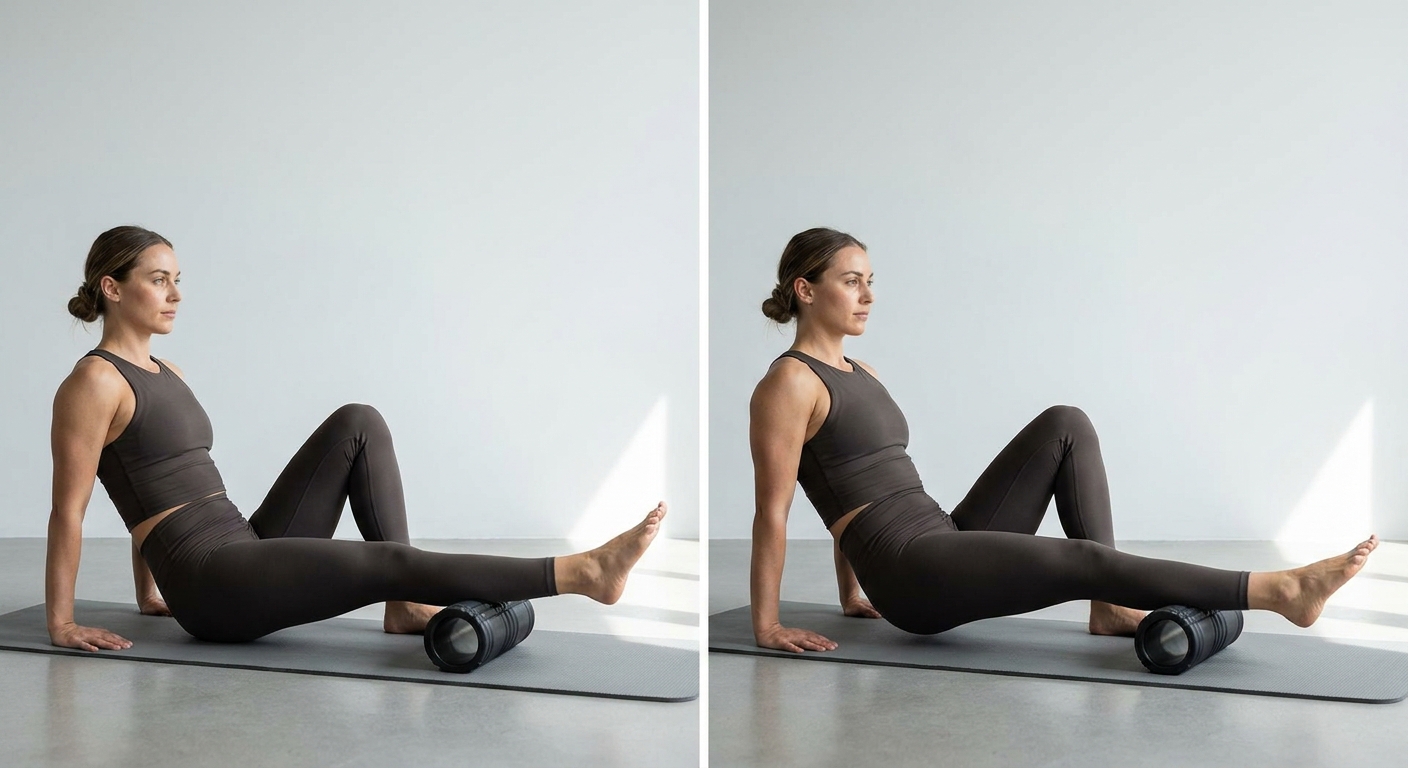
02Foam Roller Calf Release
Calves
Sit on the floor with your leg extended and place a foam roller under the upper part of your calf. Support on your hands and let your body weight sink onto the roller. Roll slowly up and down from just below the knee to the middle of the calf. Breathe calmly and do not force the pressure.
-
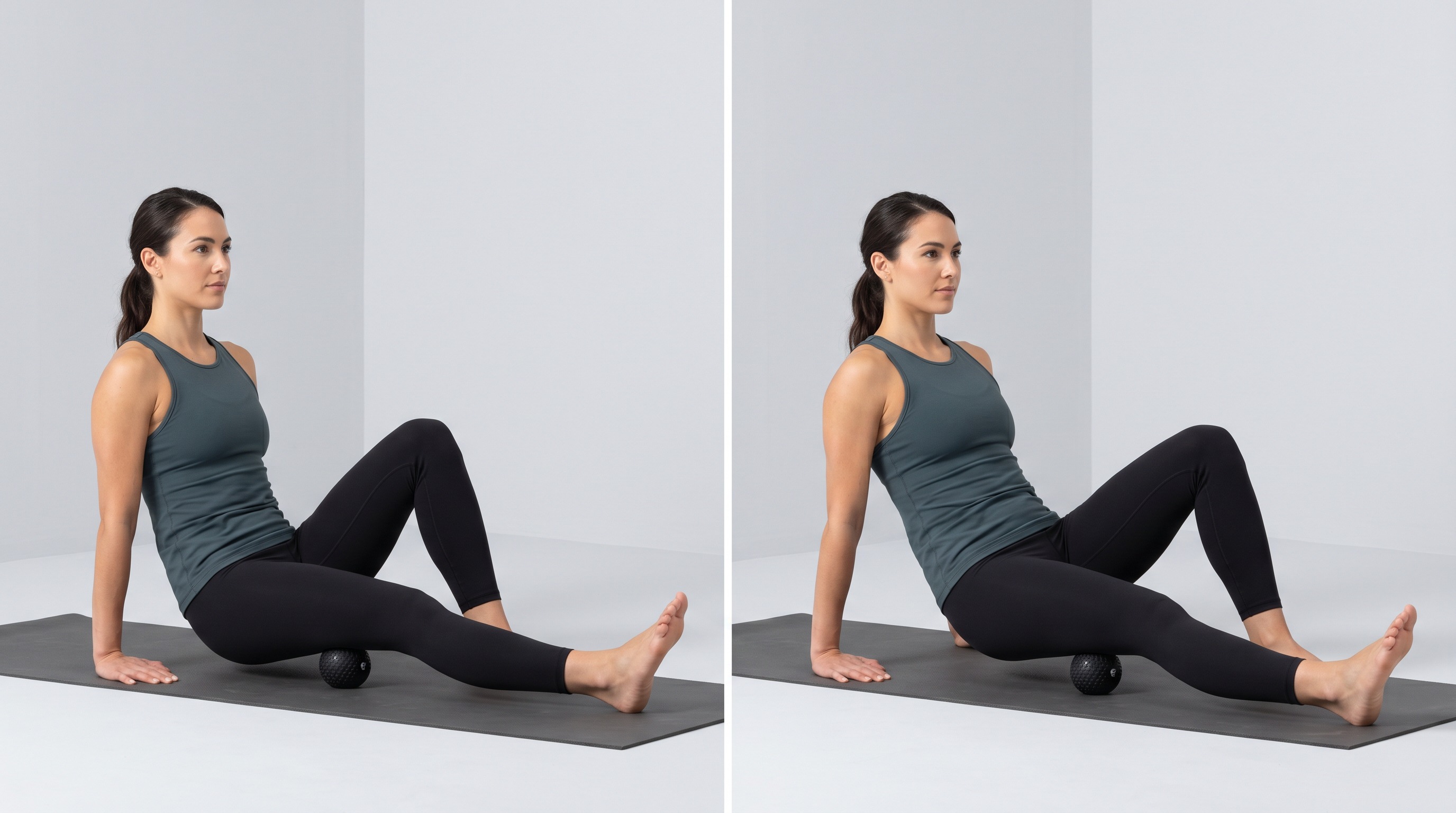
03Foam Roller Hamstring Release
Hamstrings
Sit on the floor with your leg straight and place a massage ball or foam roller under the back of your thigh. Support yourself on your hands and let your body weight sink gently onto the ball, and find a tender point. Roll slowly up and down over the muscle. Keep breathing calmly and don't force the pressure.
-
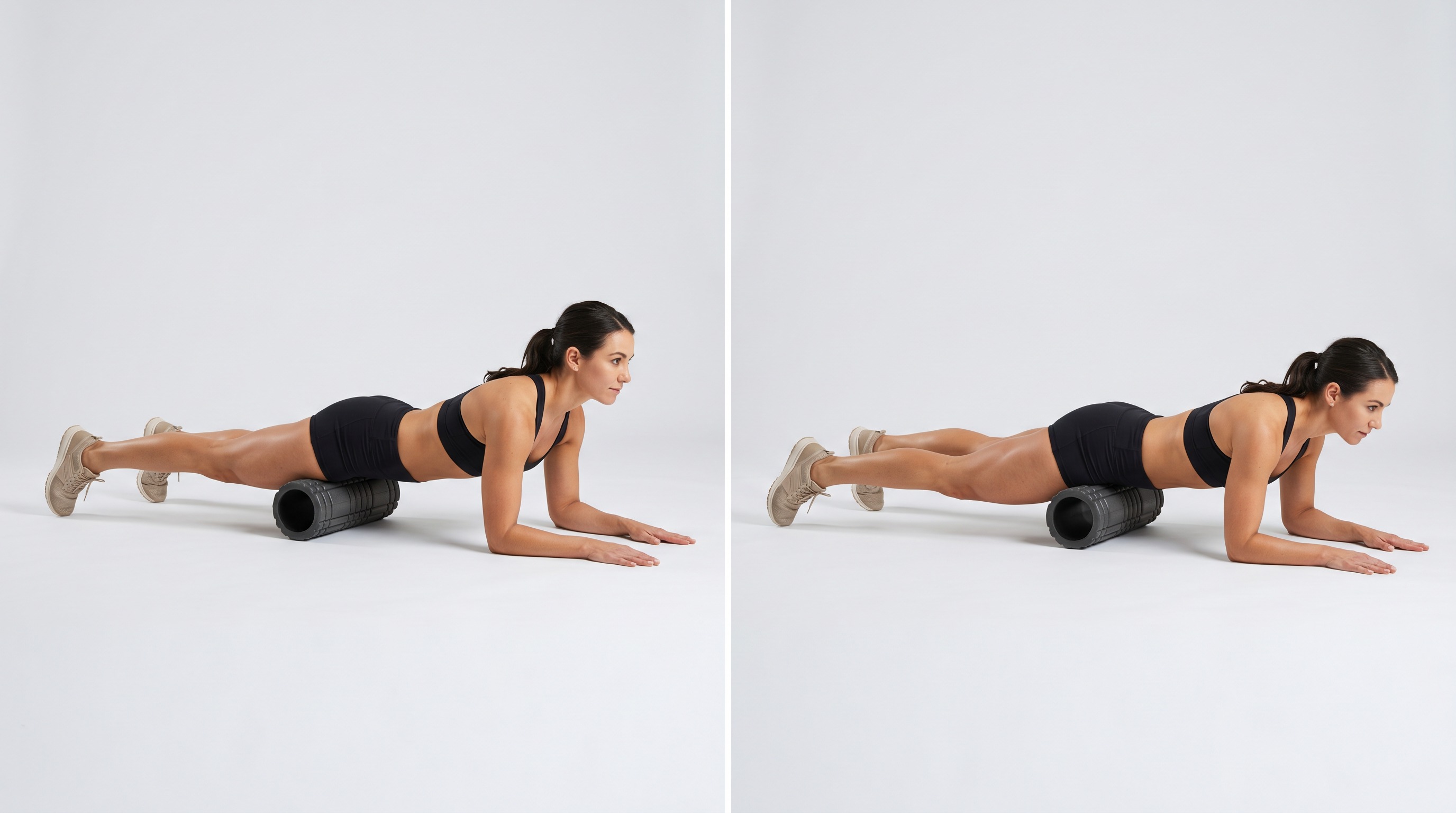
04Foam Roller Quadriceps Release
Quadriceps
Lie face down and place a foam roller under the front of your thigh. Support yourself on your forearms and let your body weight sink gently onto the roller, and find a tender point. Roll slowly up and down between your hip and your knee. Keep breathing calmly and don't force the pressure.
-
Full video in Kinmo
05Foam Roller Adductor Release
Adductors
Lie face down, rest on your forearms and bend one leg out to the side, with the foam roller under the inside of your thigh. Roll slowly from just above your knee toward your groin, without reaching the groin crease. Keep your hips level and pause briefly on a tender point. Keep breathing calmly and don't force the pressure.
-
Full video in Kinmo
06Foam Roller Piriformis Release
Glutes
Sit on a foam roller and place your ankle over your other knee. Lean toward the side of your crossed leg and support yourself with your hands behind you on the floor. Roll slowly over your buttock in small movements and pause briefly on a tender point. Keep breathing calmly and don't force the pressure.
-
Full video in Kinmo
07Foam Roller Lat Release
Lats
Lie on your side with a foam roller under your armpit and your bottom arm straight overhead on the floor. Keep your hips and legs stacked and your body in a straight line. Roll slowly from your armpit toward your mid-back and find a tender point. Keep breathing calmly and don't force the pressure.
-
Full video in Kinmo
08Foam Roller Suboccipital Release
Suboccipitale spieren · Nekextensoren
Lie on your back and place a foam roller under the base of your skull. Let your head rest heavily on the roller and relax your jaw. Slowly turn your head from one side to the other with small movements and pause on a tender point. Keep breathing calmly and don't force the pressure.
-
Full video in Kinmo
09Foam Roller Hamstring Curl
Hamstrings · Glutes
Lie on your back with your legs straight and your heels on a foam roller. Press your arms into the floor beside your body and lift your hips into a bridge. Pull the foam roller toward your buttocks by bending your knees. Roll it back out under control without letting your hips drop.
This is how a physiotherapist turns these into a program.
A physiotherapist turns exercises like these into a personal program in seconds and shares it via a link. This is what that looks like on your phone.
Are you a physiotherapist? Try Kinmo free for 30 daysUp to 100 treatment episodes, no payment details. Or try this program in the demo first.
When should you see a physiotherapist?
Want to know which exercises suit you, and how heavy? Or does an exercise hurt? A physiotherapist can help. Together you look at your situation and put together a plan that fits it.
Frequently asked questions
Is foam rolling supposed to hurt?
Pressure on a sensitive spot may feel firm, but it should not be sharp or keep getting worse. Keep breathing calmly, spread your weight and do not force the pressure. Do not roll over joints, bones or a recent injury. If in doubt, ask your physiotherapist.
How often should I do foam roller exercises?
Frequency and progression differ per person and per complaint. That is why we deliberately do not mention numbers or schedules here. A physiotherapist tailors that to your loading capacity, situation and goal.
Can I just do these exercises myself?
The exercises on this page are general examples. If you have pain, a recent injury or doubt about the execution, do not start on your own but consult a physiotherapist first.
How do I take these exercises to my physiotherapist?
Use the “Take these exercises to your physio” button. Your physiotherapist can use Kinmo to put together a personal schedule from exercises like these in seconds and share it with you via a link.