Exercises for the lower back with photos and instructions.
Exercises for the lower back strengthen not only your back but also your abdominal and glute muscles, which helps the spine distribute forces better. The lower back is built to absorb large forces, but through a lot of sitting or a sudden overload the balance can become disturbed. If your back load tolerance decreases, the body often reacts with pain or stiffness. Below are examples with photos and instructions.
This page provides general information and is not a substitute for physiotherapy advice. If you have any complaints, consult a physiotherapist.
Exercise sheet · Lower back · 9 exercises
Exercises for your lower back
General examples with an image and a short explanation. Which exercises suit you is something you decide together with your physiotherapist.
-
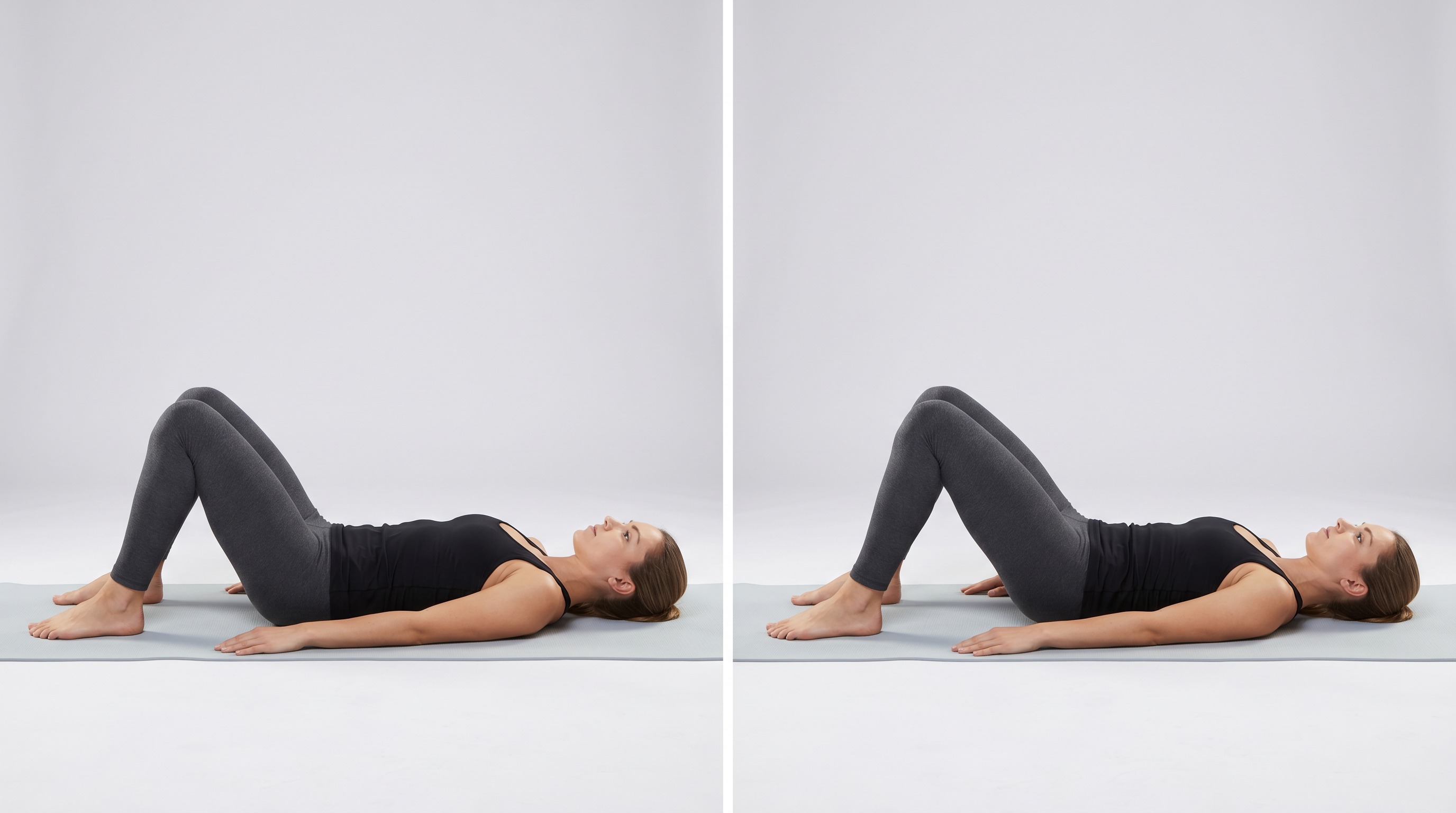
01Pelvic Tilt
Abs · Glutes
Lie on your back with your knees bent and your feet flat on the floor. Actively press your lower back into the mat by tilting your pelvis slightly backward. Feel your abdominals engage and your glutes work along lightly. Hold the tension.
-
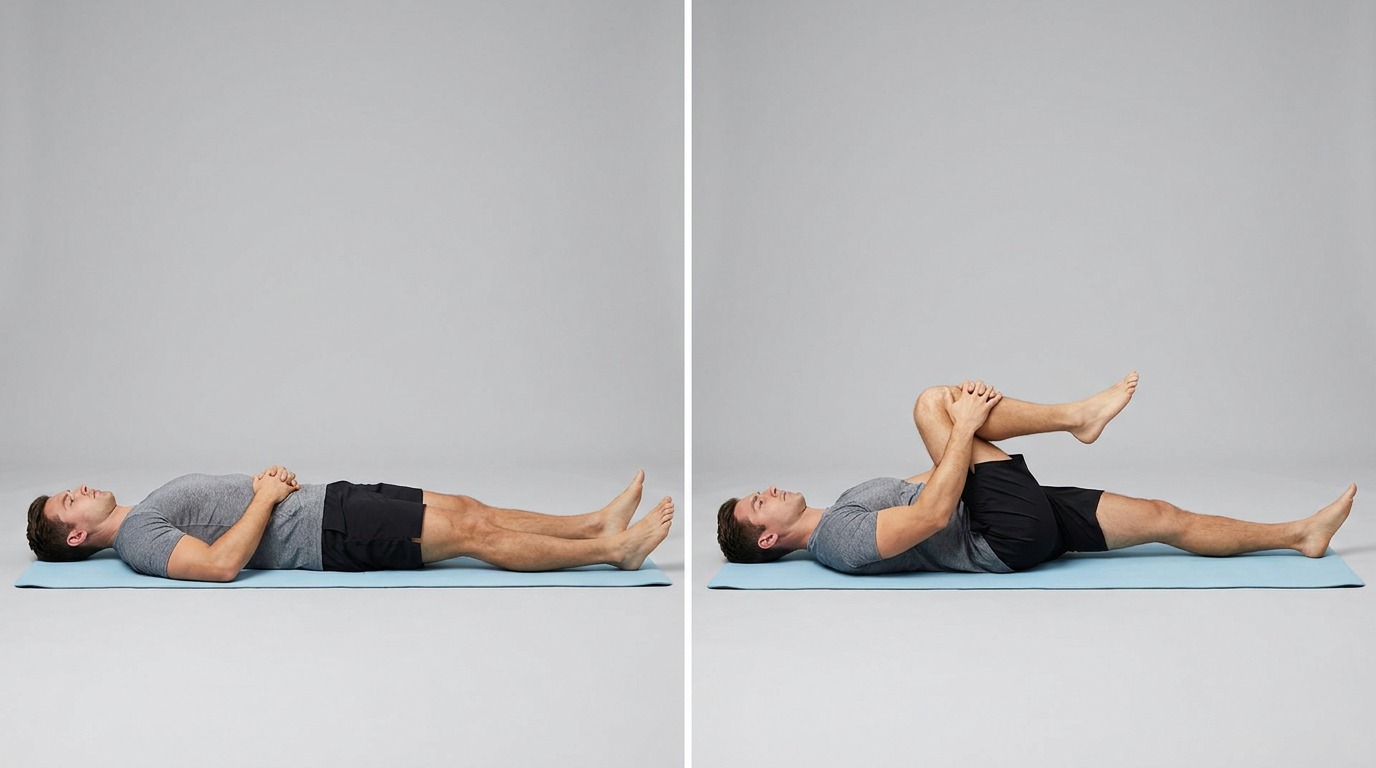
02Knee to Chest
Back Extensors · Glutes
Lie on your back with your legs straight or your knees slightly bent. Gently pull one knee toward your chest with both hands until you feel a stretch in your lower back and glute. Keep the other leg relaxed on the mat. Hold the stretch.
-
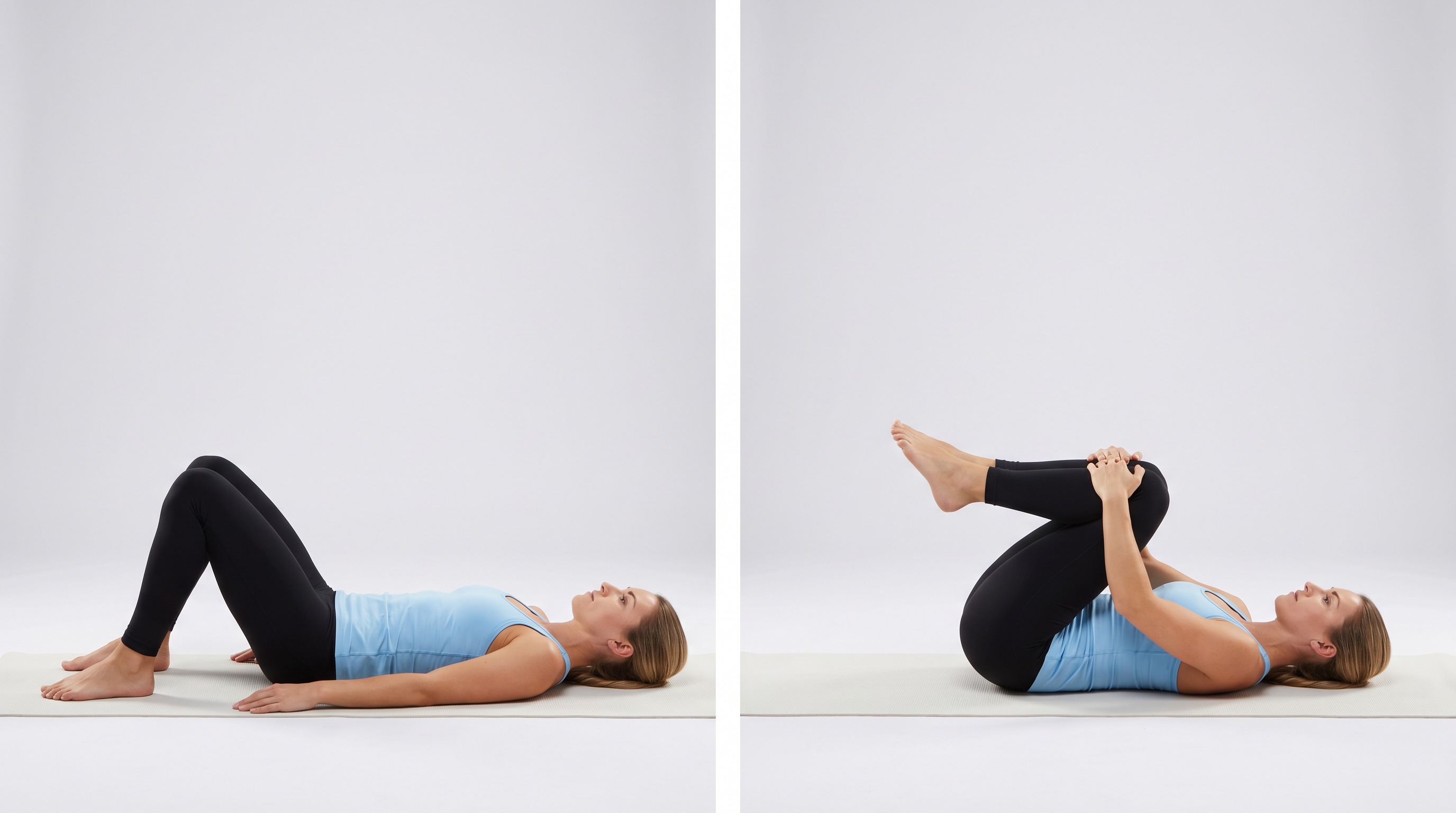
03Double Knee to Chest
Back Extensors · Glutes
Lie on your back with your knees bent and your feet flat on the floor. Gently pull both knees toward your chest and grasp them with your hands or arms. Feel the stretch in your lower back. Hold the stretch.
-
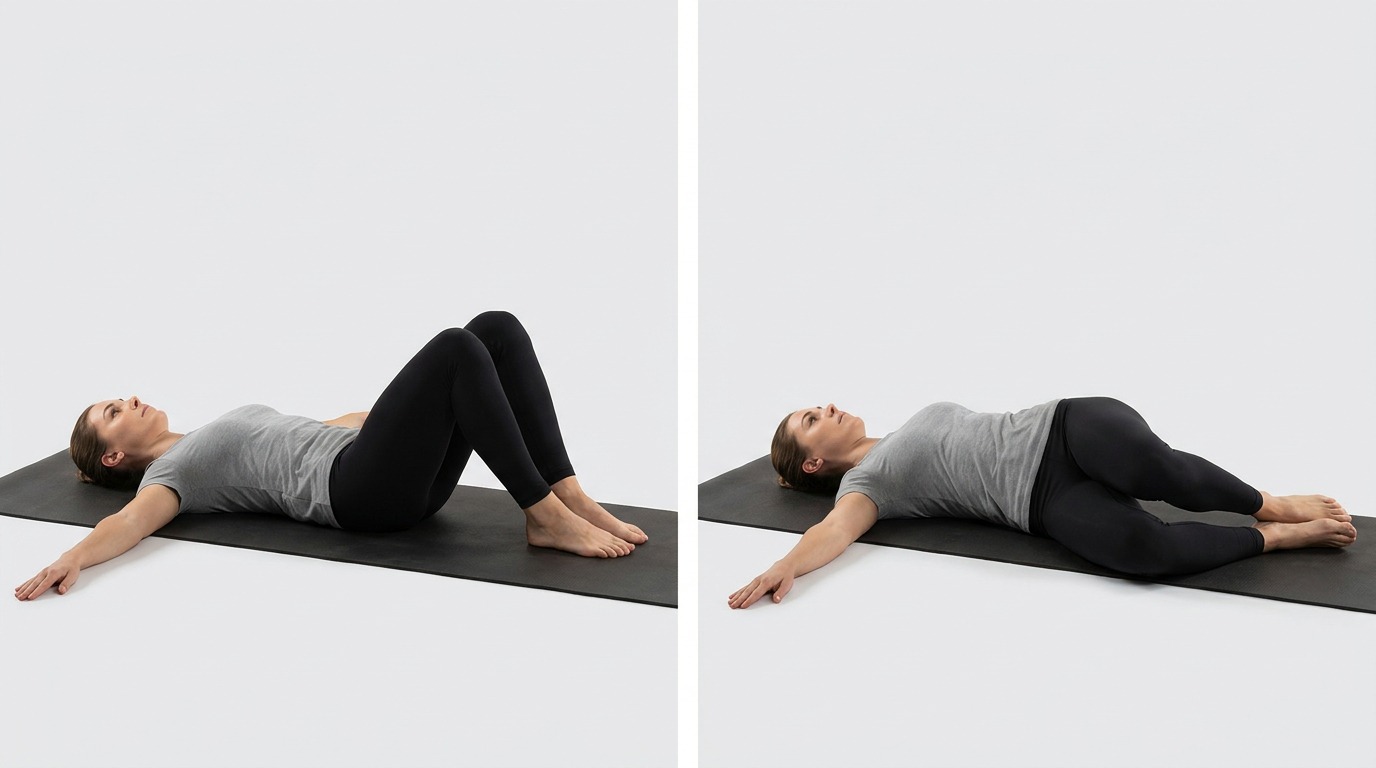
04Lower Trunk Rotation
Schuine buikspieren
Lie on your back with your knees bent and your feet flat on the floor, close together. Spread your arms out in a T-shape for support. Slowly let both knees drop together to the left while keeping both shoulders on the mat. Return through the middle and then let them drop to the right. Move calmly and within your comfortable range.
-
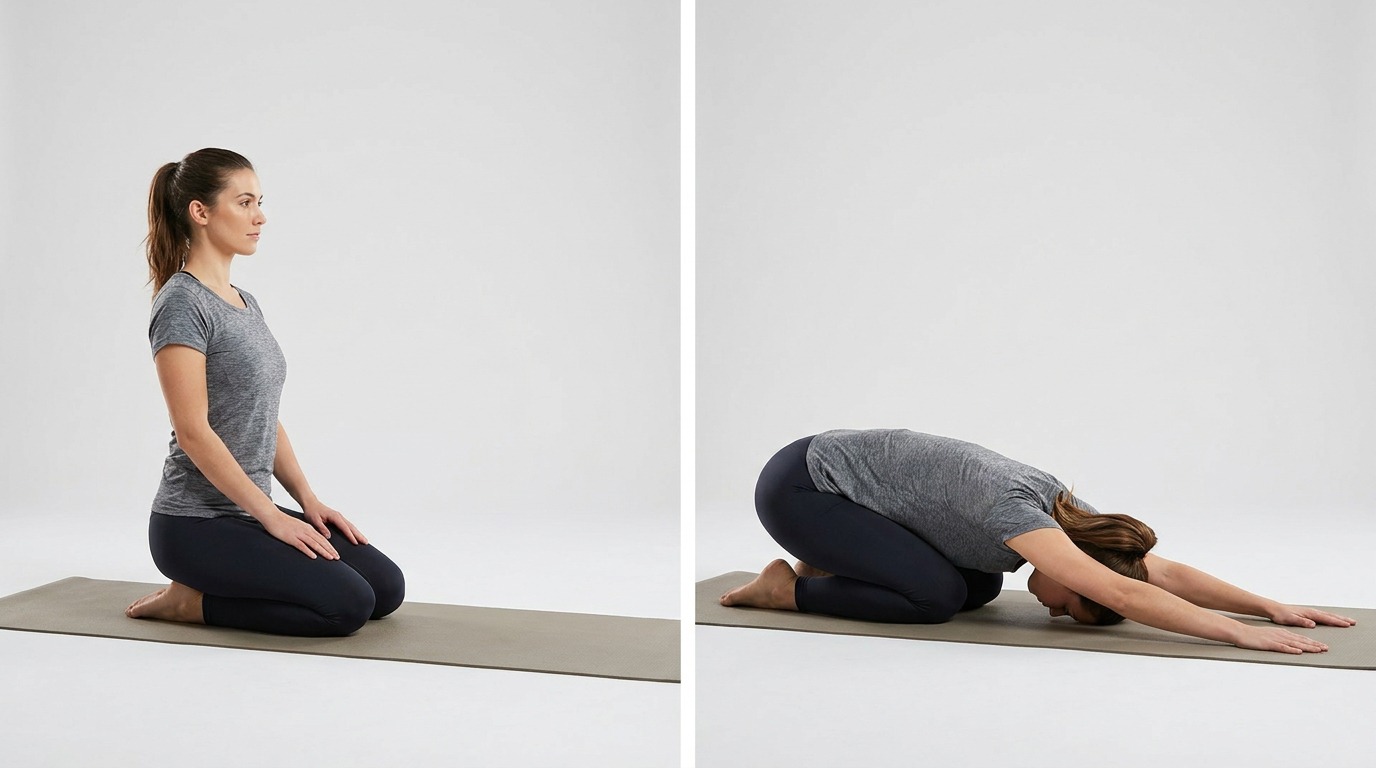
05Child's Pose
Back Extensors
Kneel down with your big toes touching and your knees apart. Sit your hips back towards your heels and stretch your arms far forward along the mat. Rest your forehead on the mat and breathe calmly and deeply. With each exhale, try to relax a little further.
-
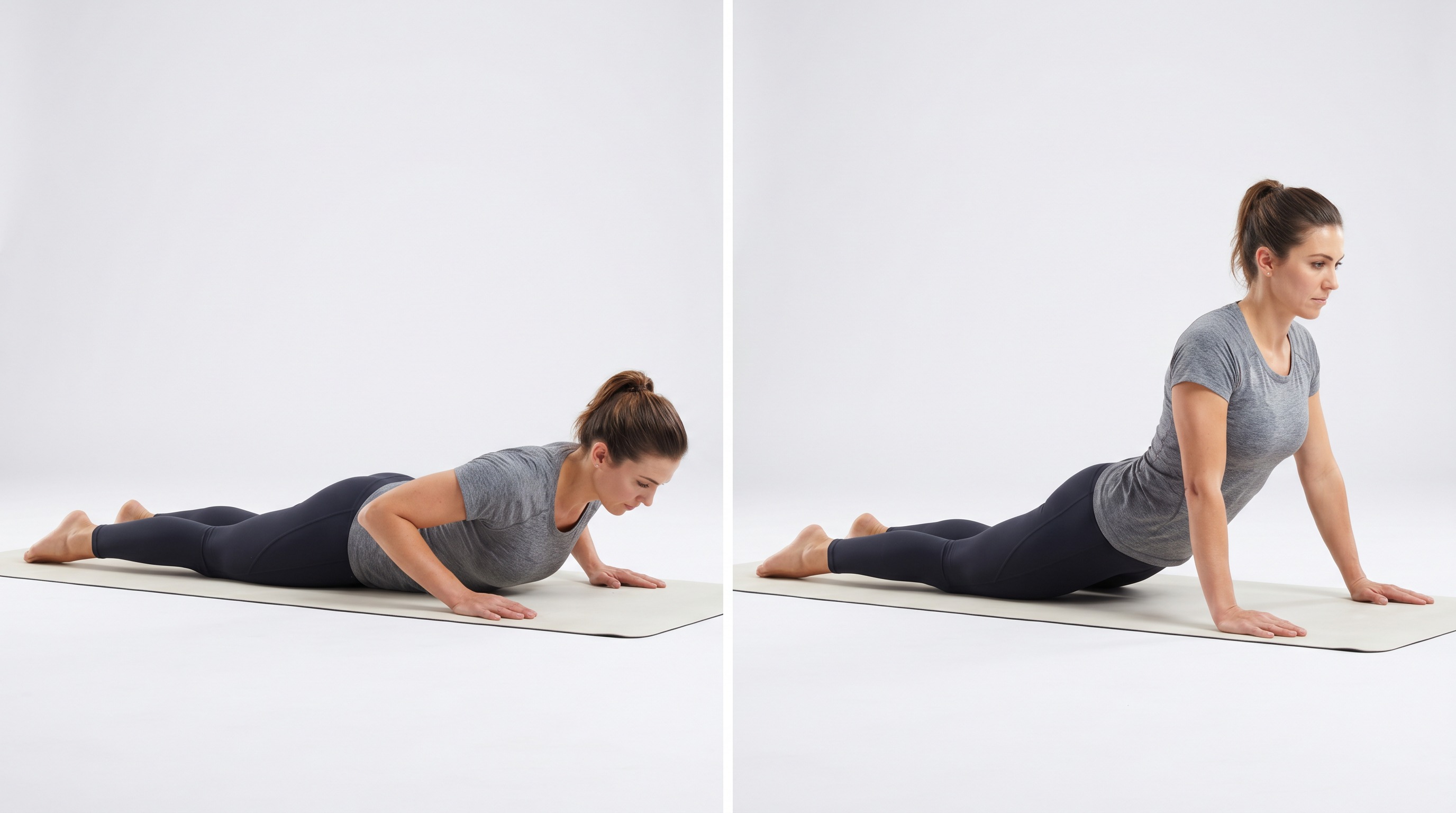
06Prone Press-Up
Back Extensors · Abs
Lie on your stomach with your hands flat under your shoulders. Push your upper body slowly up while keeping your hips relaxed on the floor. Go only as high as feels comfortable in your lower back. Lower under control.
-
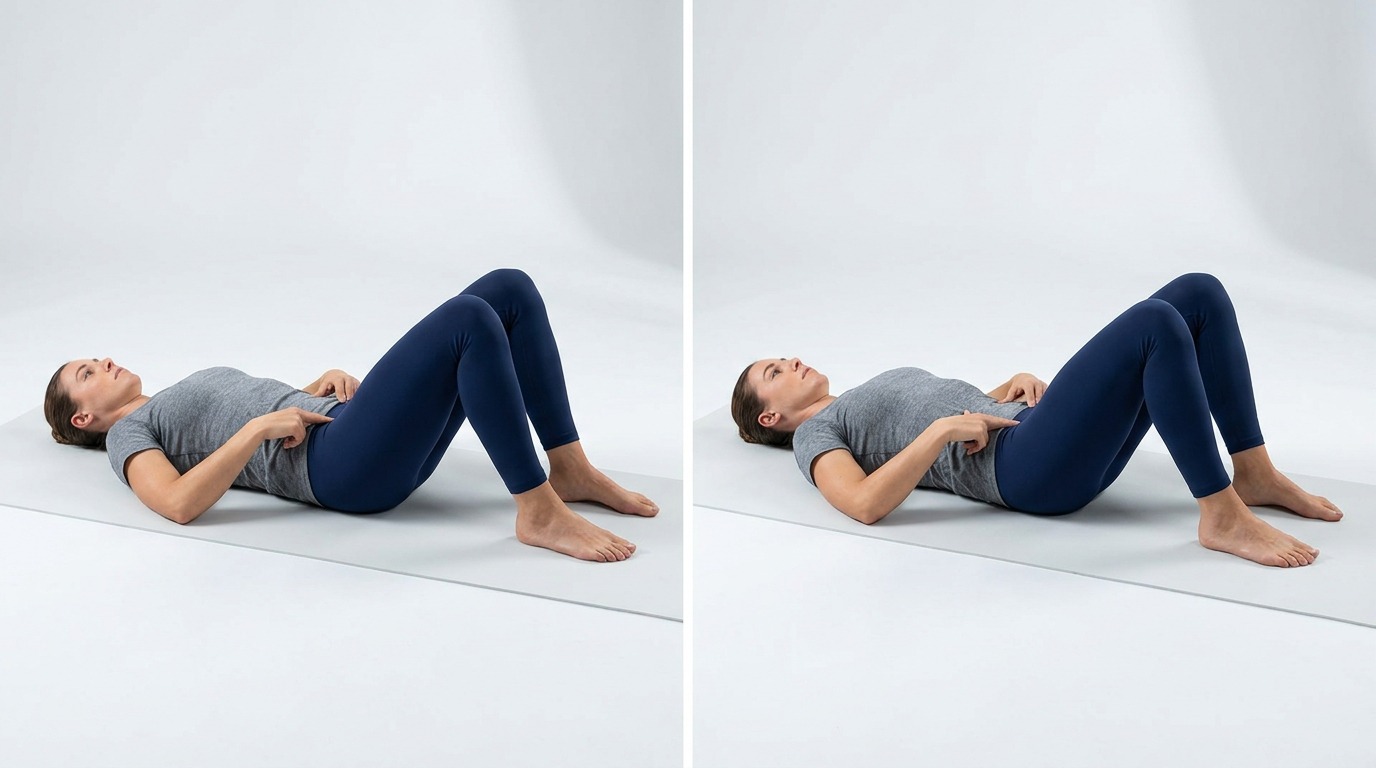
07Transverse Abdominis Activation
Abs · Pelvic Floor
Lie on your back with your knees bent and your feet flat on the floor. Place your fingertips on your hip bones, then move them two centimeters inward and downward. Breathe out calmly and gently draw your lower belly inward, as if buttoning up a pair of too-tight pants. Feel a light tension under your fingers. Hold the tension while continuing to breathe normally.
-
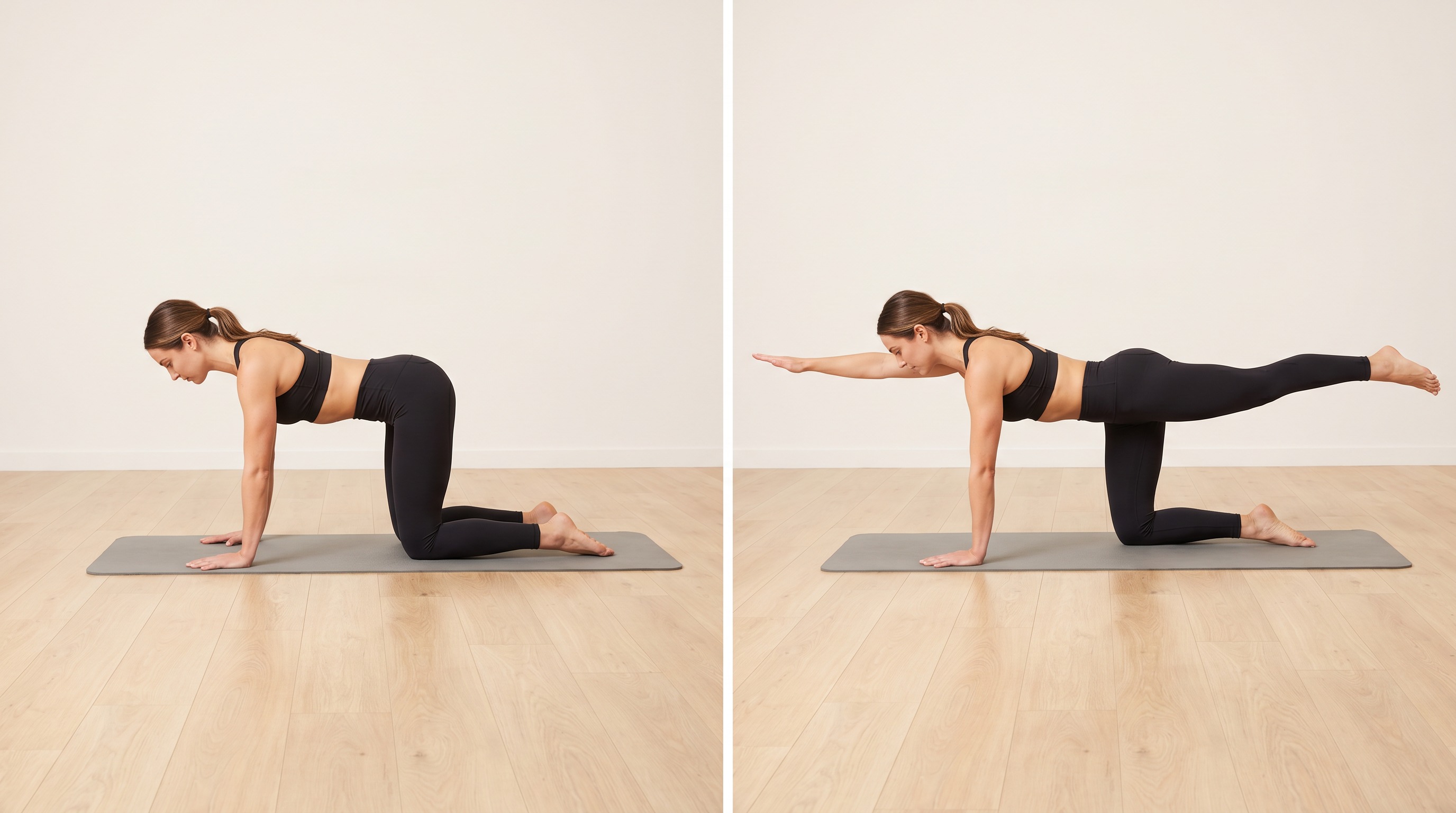
08Bird Dog
Abs · Glutes
Get on your hands and knees with your hands under your shoulders and your knees under your hips. Reach your right arm forward and your left leg back at the same time, until they line up with your back. Keep your hips level and your core lightly engaged so you don't wobble. Return calmly to the centre.
-
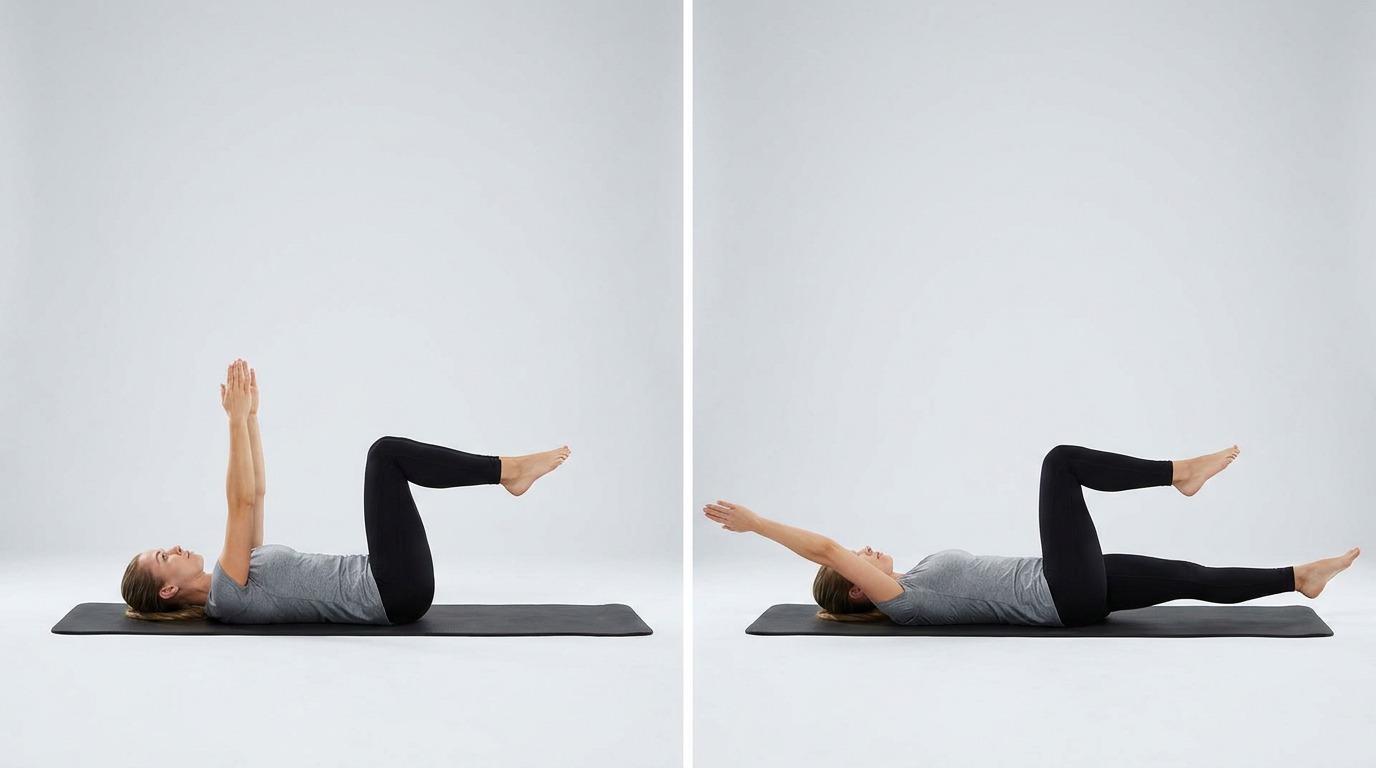
09Dead Bug
Abs
Lie on your back with your arms extended straight up and your hips and knees bent at 90 degrees. Extend your right arm back overhead and your left leg forward at the same time, to just above the floor. Keep your lower back actively pressed into the mat so no gap forms underneath. Return.
This is how a physiotherapist turns these into a program.
A physiotherapist turns exercises like these into a personal program in seconds and shares it via a link. This is what that looks like on your phone.
Are you a physiotherapist yourself? This is how you build programs like this in secondsWhen should you see a physiotherapist?
Lower back pain during movement or at rest? Or questions about training or load? A physiotherapist can help. Together you look at the cause and put together a plan that fits your situation.
Frequently asked questions
Do lower back exercises help with a hernia or sciatica?
For a herniated disc or sciatica complaints exercises are often used to calm nerve sensitivity and to make the back gradually loadable again. In the acute phase the focus is on calm movements and symptom-guided progression; later this transitions to strength and stability exercises. The right choice is phase-bound and personal, so always seek guidance from a physiotherapist.
How often should I do lower back exercises?
Frequency and progression differ per person and per complaint. That is why we deliberately do not mention numbers or schedules here. A physiotherapist tailors that to your loading capacity, situation and goal.
Can I just do these exercises myself?
The exercises on this page are general examples. If you have pain, a recent injury or doubt about the execution, do not start on your own but consult a physiotherapist first.
How do I take these exercises to my physiotherapist?
Use the “Take these exercises to your physio” button. Your physiotherapist can use Kinmo to put together a personal schedule from exercises like these in seconds and share it with you via a link.